Luke Hymann
Gyprock Ceiling and Wall Repairs in Caringbah South, NSW
Restoration

Small holes in a wall and a cracked patch on the ceiling are easy to live with for a while. But damaged gyprock rarely improves on its own, and repairing it properly is what gets a room ready to paint and looking finished again.
At a home in Caringbah South, NSW, High Demand Restoration carried out minor gyprock repairs to a stairwell wall and a TV room ceiling.
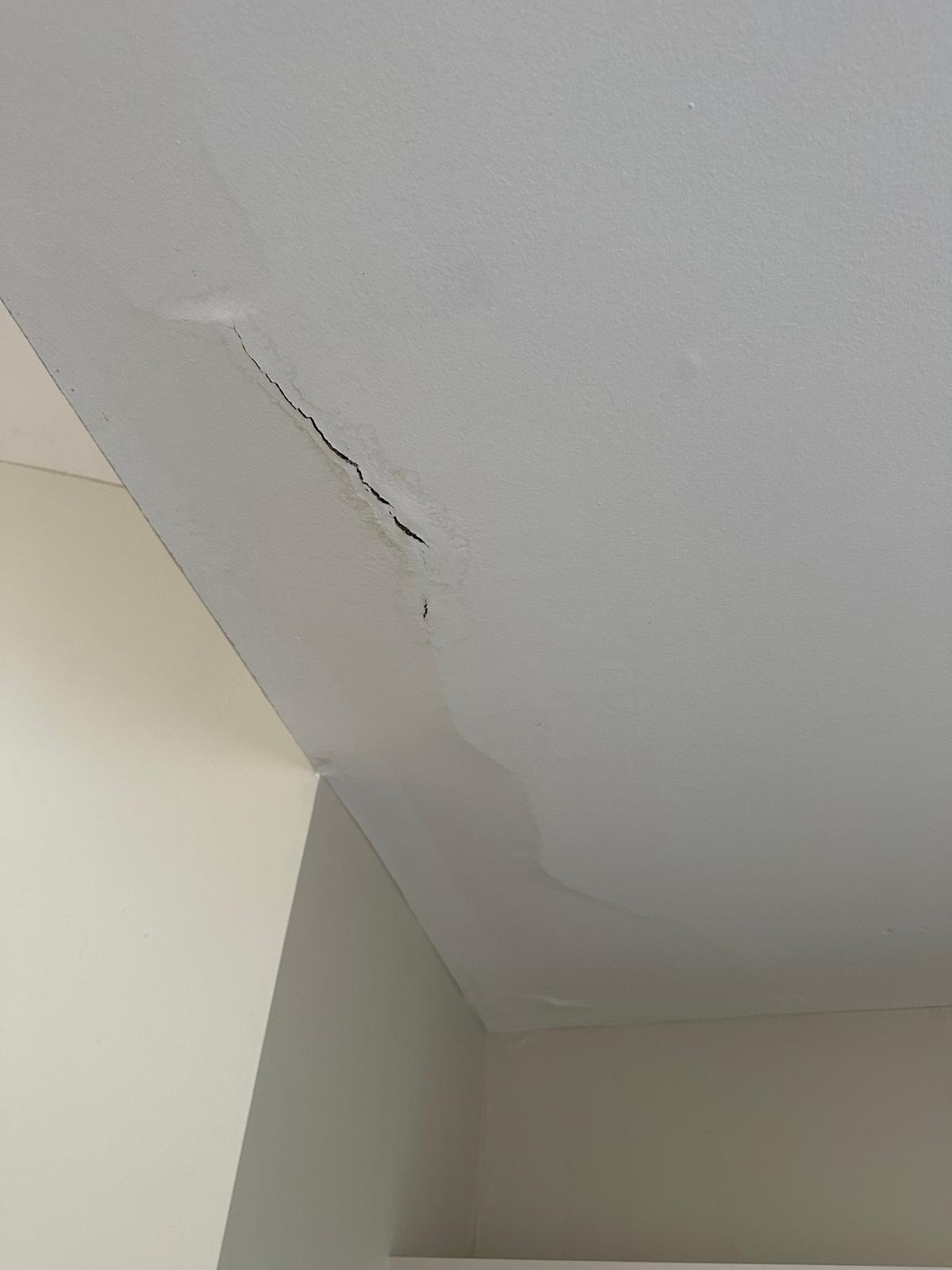
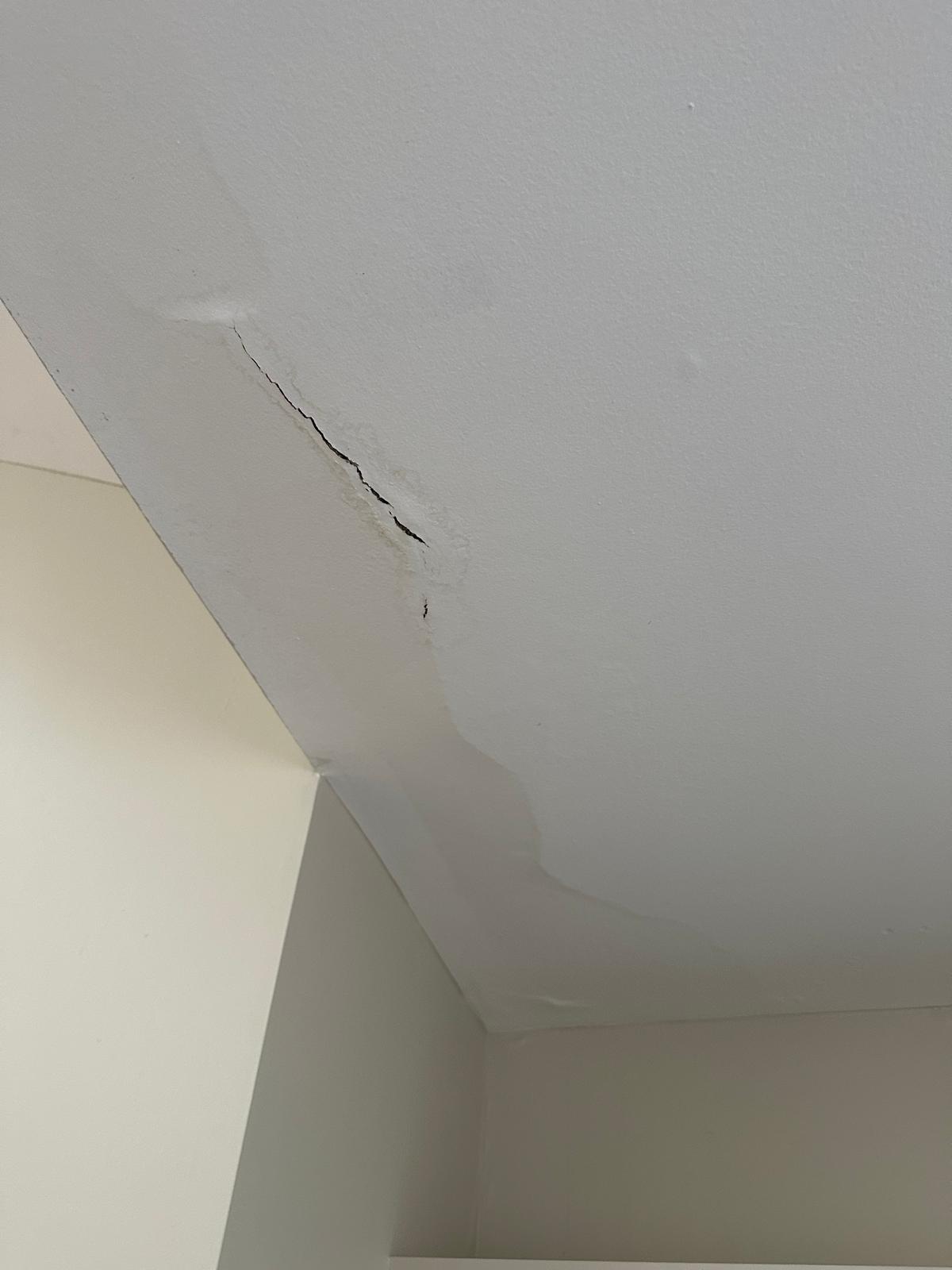
A section of the TV room ceiling had been affected by water damage. The gyprock had cracked along a join and was bulging where the board had been weakened.
Rather than patching over the top, the affected section of ceiling was replaced with a new gyprock sheet. Before the work started, the bookshelves below were covered with plastic to protect them from dust.
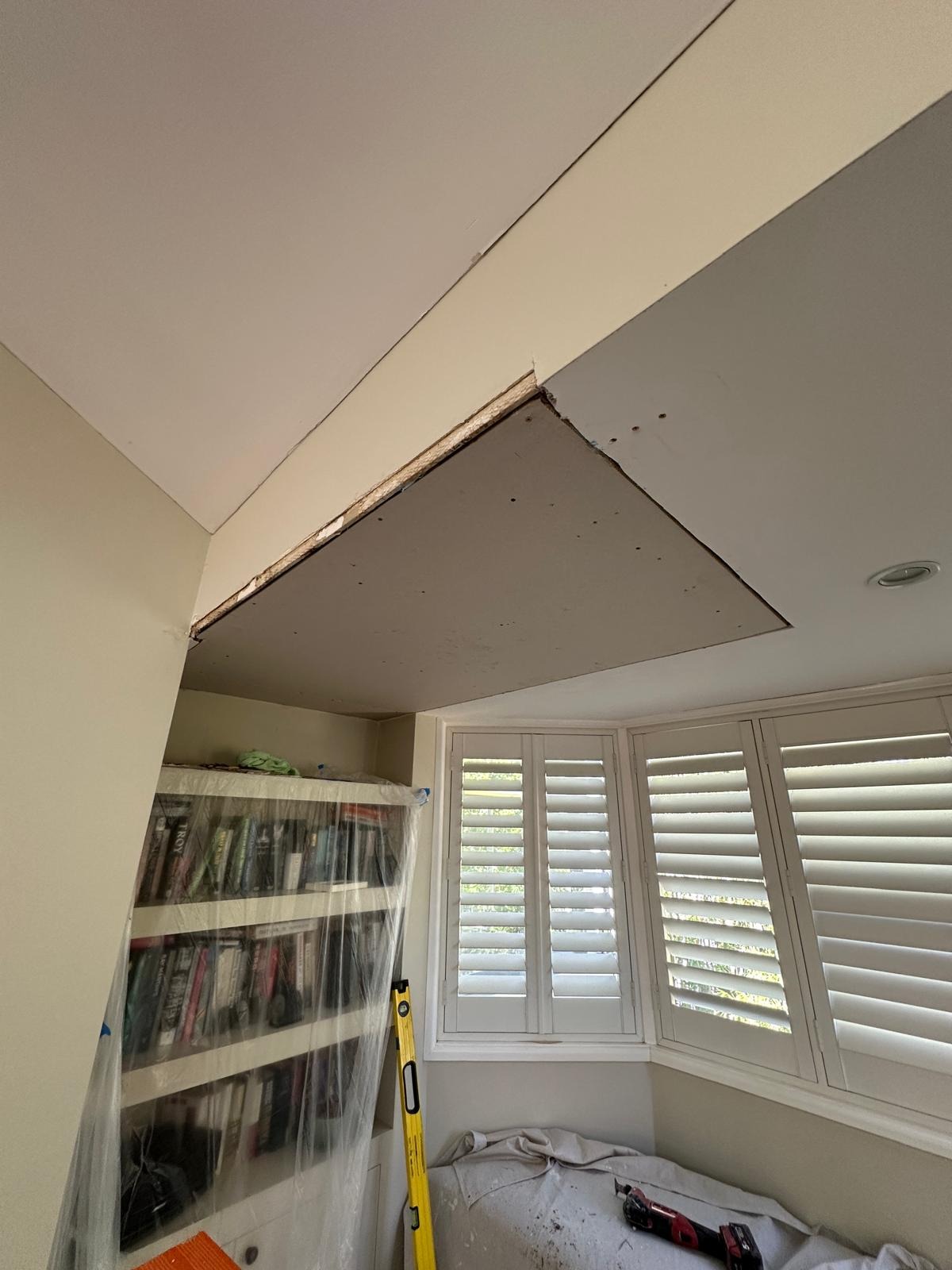
Gyprock that has been wet can soften, sag and lose its strength. Filling a crack on the surface hides it for a while, but the damaged board underneath can keep moving, and the crack often comes back. Replacing the affected section gives a solid base, so the repair lasts once the room is painted.
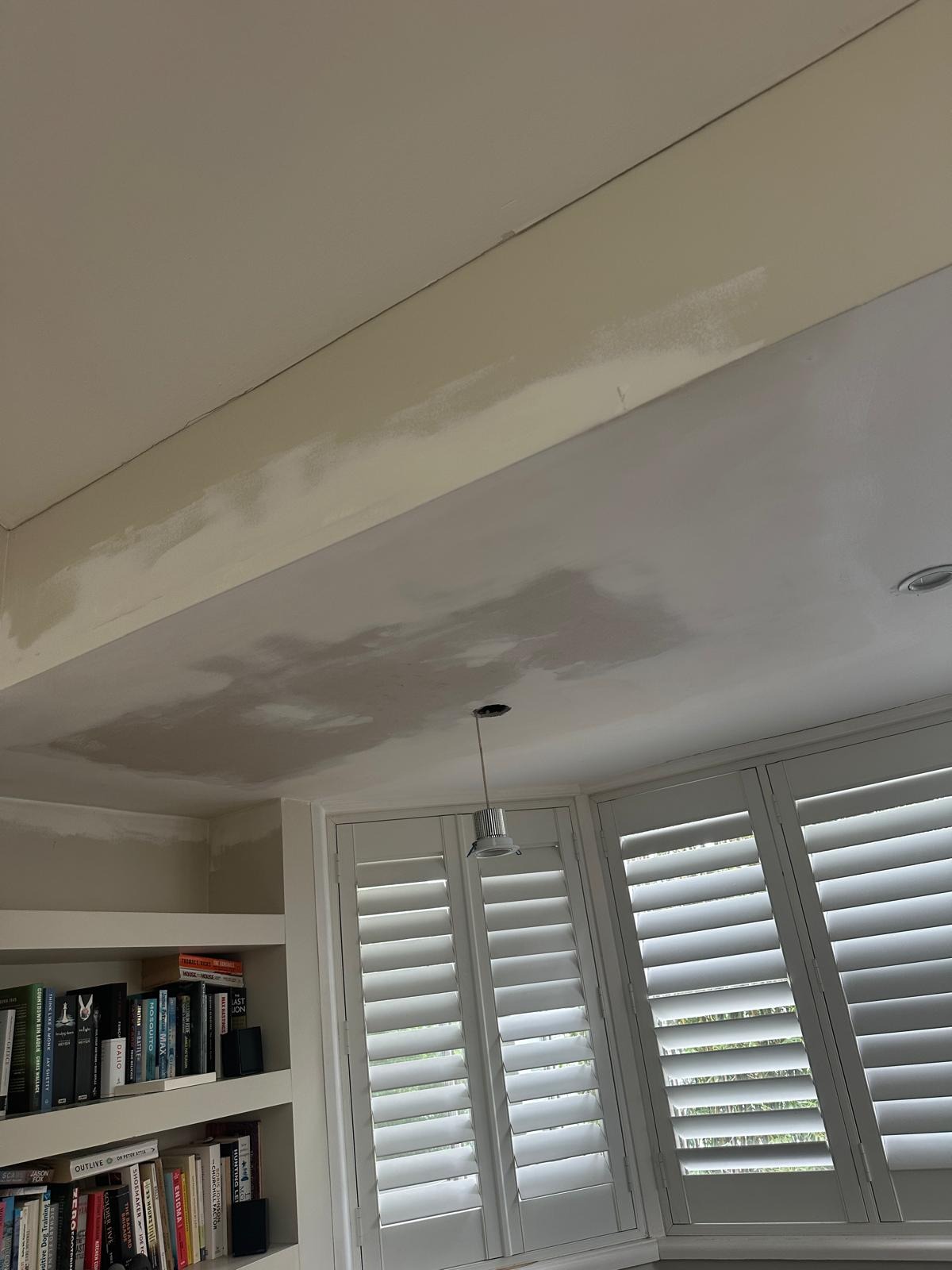
With the new section in place, the joins and the surrounding ceiling and bulkhead were patched with compound so the new board blends into the existing ceiling.
The stairwell wall had three small holes. Each one was filled and patched so the wall surface was solid again.
Filler needs time to set before it can be finished, so the job was done over two visits. The first visit covered the ceiling replacement, filling and patching. Our team then returned to sand the repaired areas smooth, ready for painting. The site was left clean and tidy.
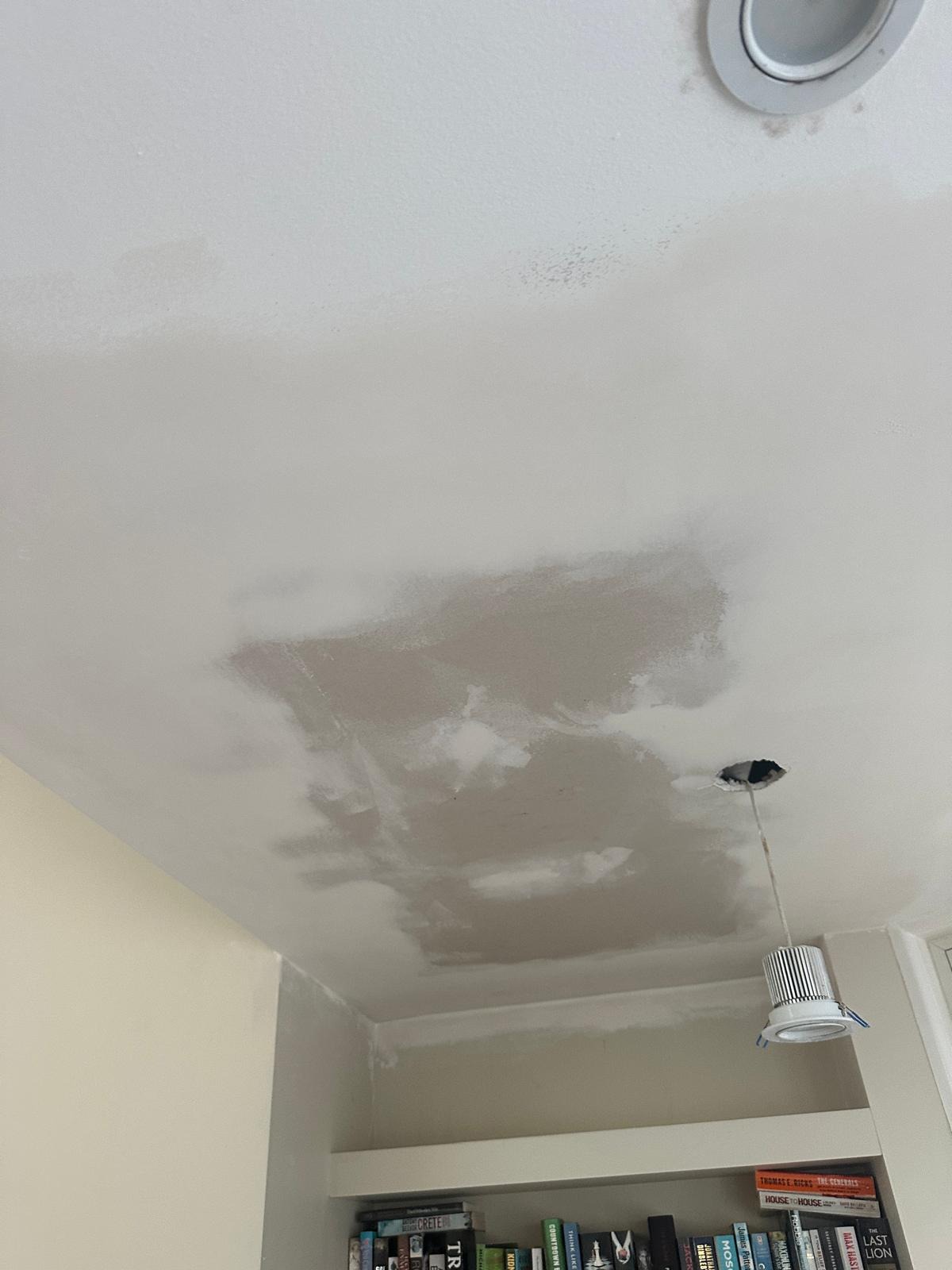
Paint shows every bump and edge underneath it. A patch that isn’t sanded flush with the surface around it will still be visible after painting, especially on a ceiling where light hits it from the side. Sanding properly is what makes a repair disappear once the paint goes on.
Need repairs or restoration work in Caringbah South? Call (02) 9090 4625 or book a call with our team.